
The Vision Experiment
We organised an event called “The Vision Experiment” at the University of Sussex. The project was designed both to collect a large dataset and to engage incoming students with the research happening on campus.
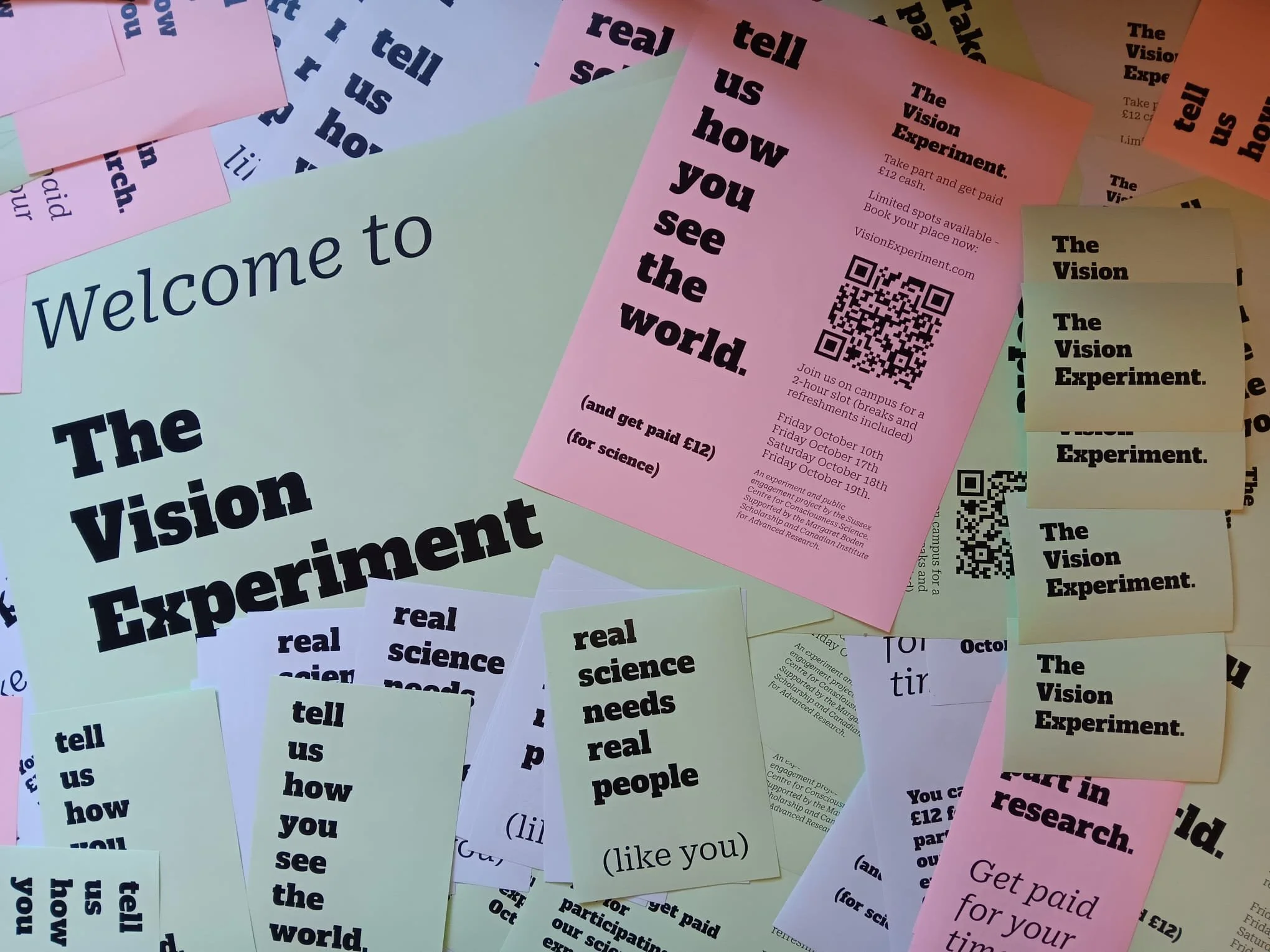
Students were invited to not only take part in an experiment, but learn about how the scientific process works.
Using a bespoke drawing interface to capture participants’ hallucinations, the study produced what may be the most detailed experimental dataset to date on the structure of stroboscopically induced visual hallucinations.
Following an initial recruitment push, hundreds of students signed up during the first weeks of the spring 2025 semester. Because the experiment had strict eligibility criteria, ineligible volunteers were redirected to other studies running on campus. Ultimately, 99 participants took part in the Vision Experiment across two weekends in October
We took over the Future Technologies Lab for the event, setting up the space to handle up to 40 participants per day, with the experiment completed in groups of up to 9 people at once.
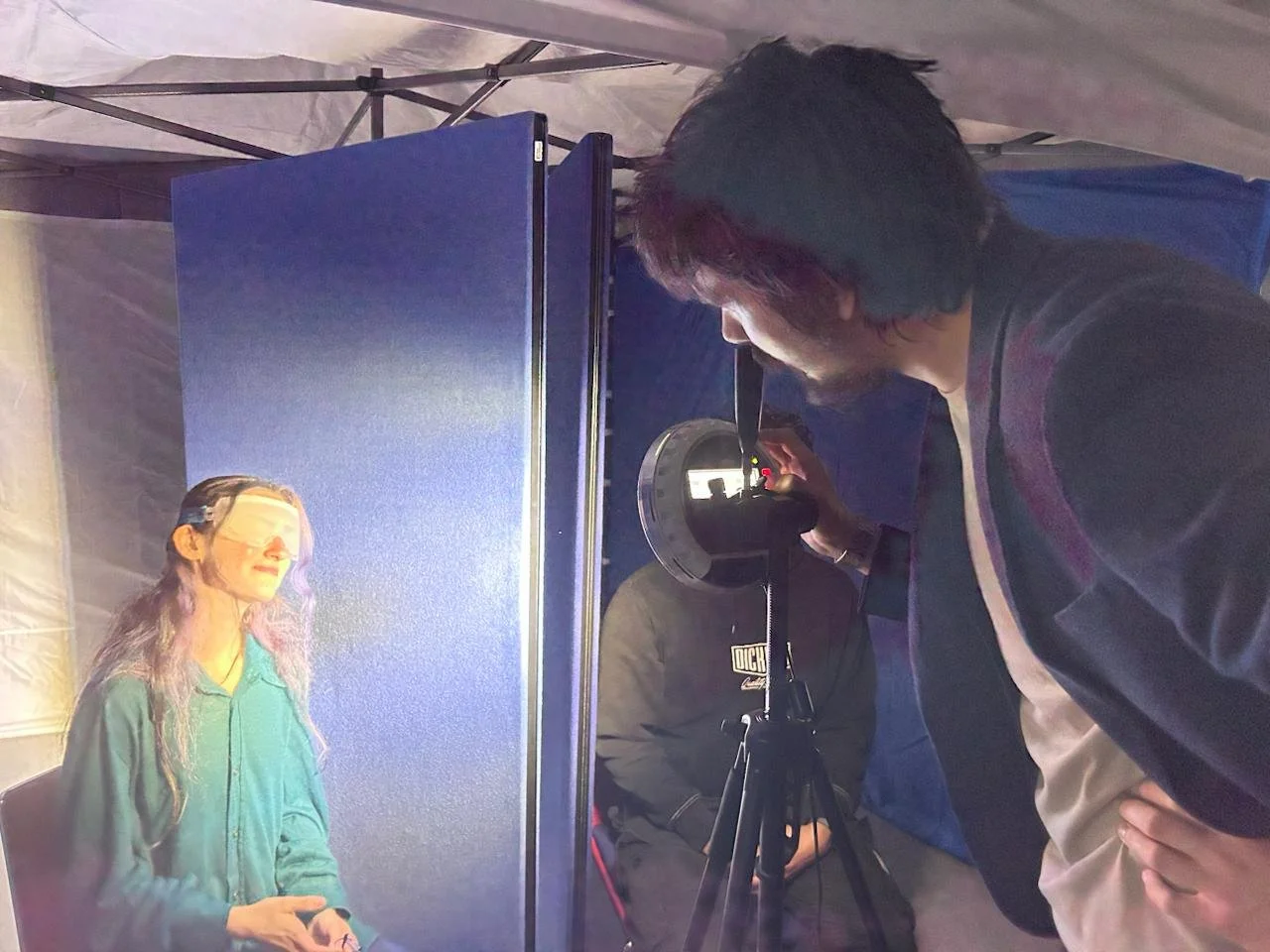
Researchers testing the set up, which allowed for small groups of participants to be induced with strobe hallucinations simultaneously
Over the course of two hours, participants experienced strobe-induced visual hallucinations and were trained to draw detailed representations of what they saw.
Afterwards, participants learned about the scientific process and how they contributed to it by taking part in the experiment.
On our feedback form, participants commented things like “I was filled with curiosity, eager to explore the depths of what I was seeing,” and that the experience “wasn’t like anything I’d done before.”
The data are currently being analysed and will form the basis of an upcoming publication. Initial findings will be presented at the 2026 Berlin Symposium on Stroboscopic Light.
Many thanks to the team who made this project possible:
Lead researcher: Trevor Hewitt
Supervising researchers: Anil Seth and David Schwartzman
Coding and technical support: Anestis Lalidis Mateo
Research Assistants: Bailey Ajayi, Caitlin Glover, Misha Jairamani, Róisín Sharma, and Mia Vedral.